Project lead & technical implementation – March to June 2024
Retro Games Challenge – University of Applied Sciences Augsburg
Knight Fight is a local multiplayer brawler inspired by classics like Nidhogg. The game was developed as part of the Retro Games Challenge semester project and ran on a custom-built arcade cabinet. The goal was to create a fast, fun and original game under tight technical constraints.
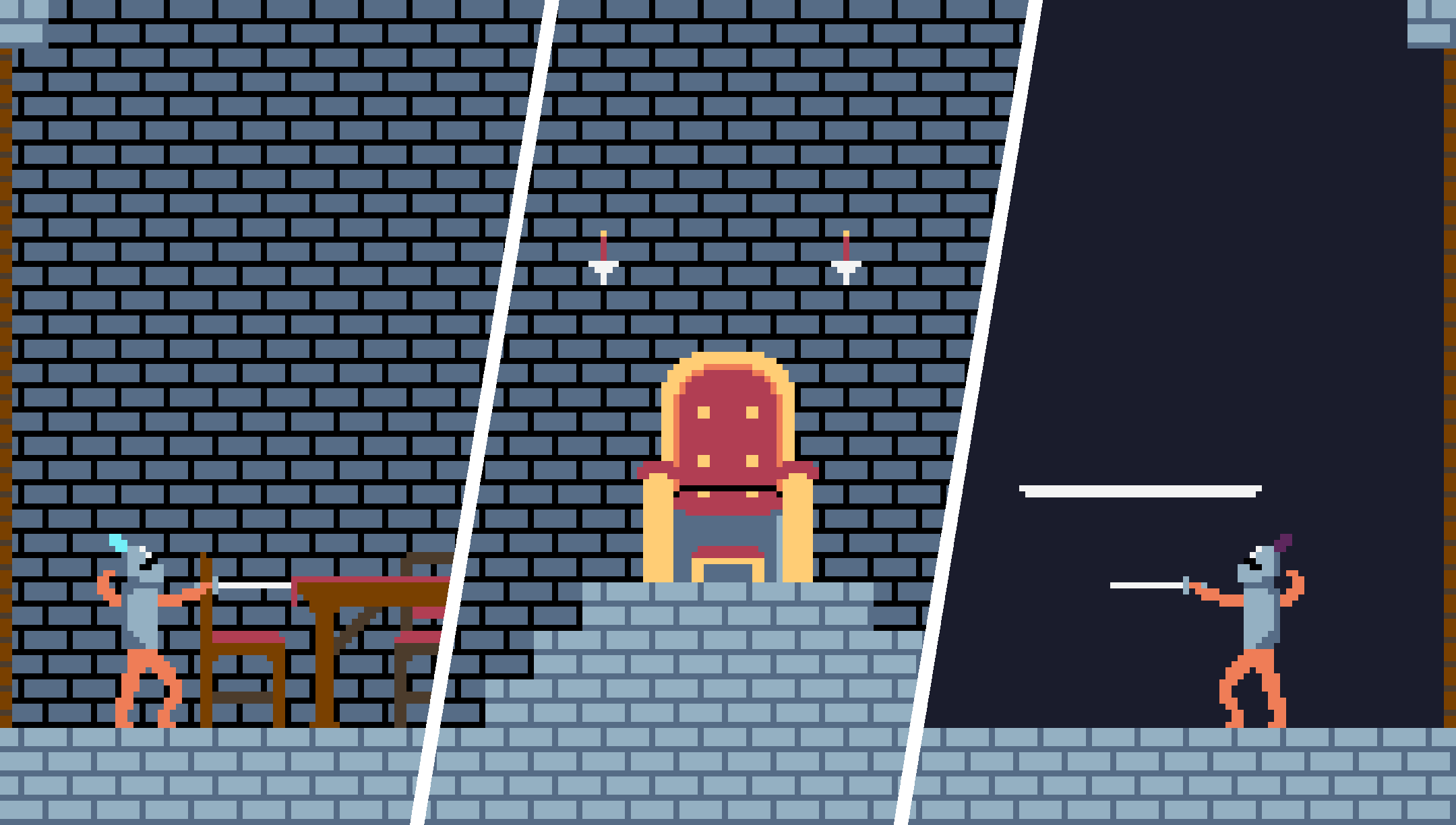
Core gameplay focuses on a fast-paced 1v1 with ranged and melee attacks.
My role
As technical project lead of the Knight Fight team I was mainly responsible for:
- setting up the development environment (TypeScript compiler, TIC-80 API),
- integrating and extending existing frameworks,
- gameplay prototyping and bug fixing.
🔧 Implementations
- Updated TIC-80 TypeScript compiler and migrated code to the new version
- Prototyping & feature work: collision detection, win conditions, movement mechanics
- Integration into existing overworld including asset organization and refactoring
- Sound design: music and SFX for both games on the cabinet
- Team coordination & testing: organizing project structure and integration
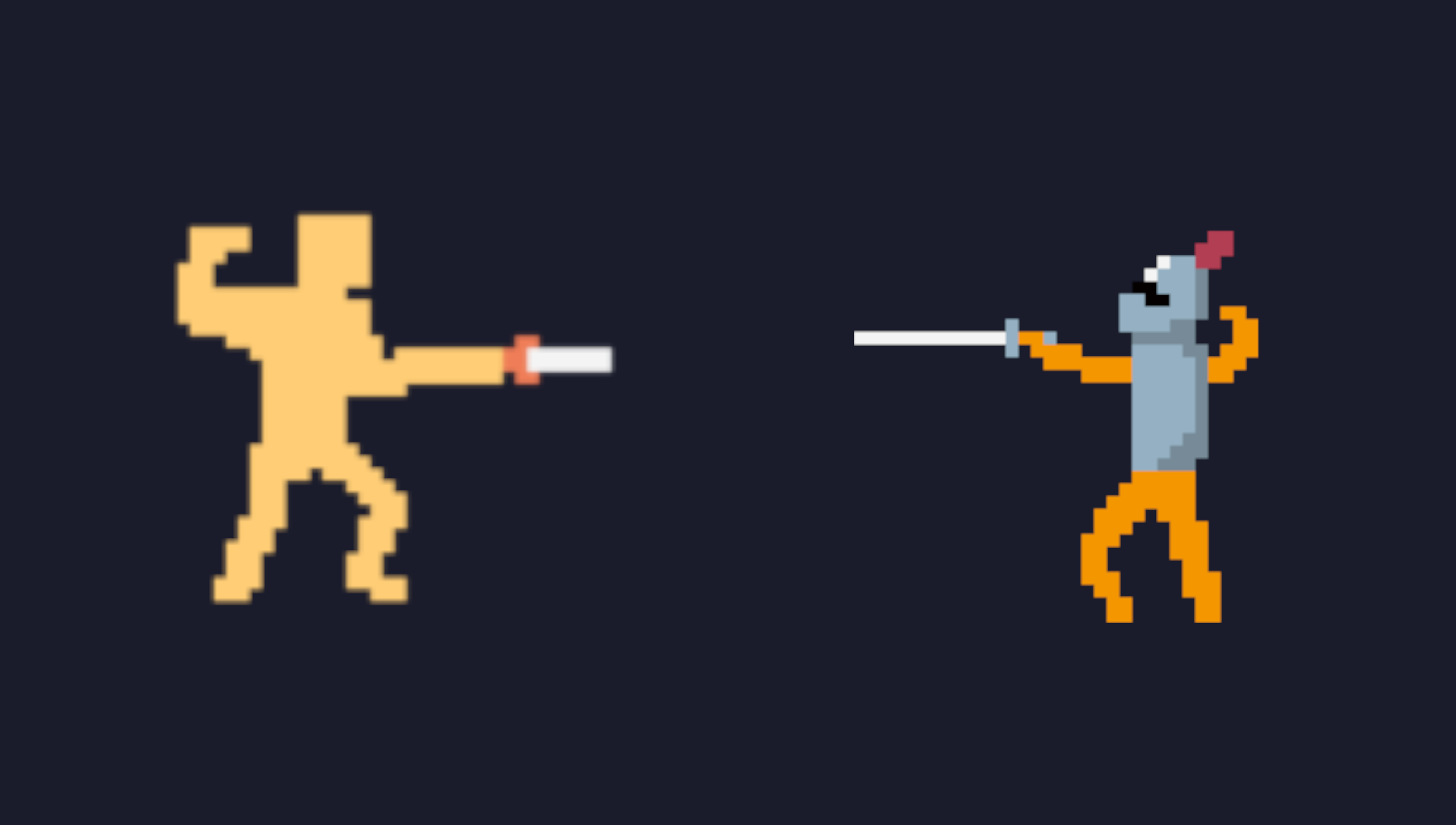
From the first pixel-art prototype to the final character sprite.
Tools & technologies
- Engine: TIC-80 (fantasy console)
- Language: TypeScript
- Build system: custom TIC-80 TypeScript compiler
- VCS: Git
- Workflow: two-team setup with structured branches & merges
Challenges & learnings
- Dealing with TIC-80’s limited memory resources
- Leading a technical team and fixing critical bugs under time pressure
- Improving internal code using modern TypeScript standards
- Interdisciplinary collaboration with design and art
Outcome
At the project day, Knight Fight was presented on a real arcade cabinet and received enthusiastic feedback from visitors — including student groups, tech fans and professors. The project placed 2nd overall. Reviewers highlighted playability, design, and the technical achievement within strict constraints.
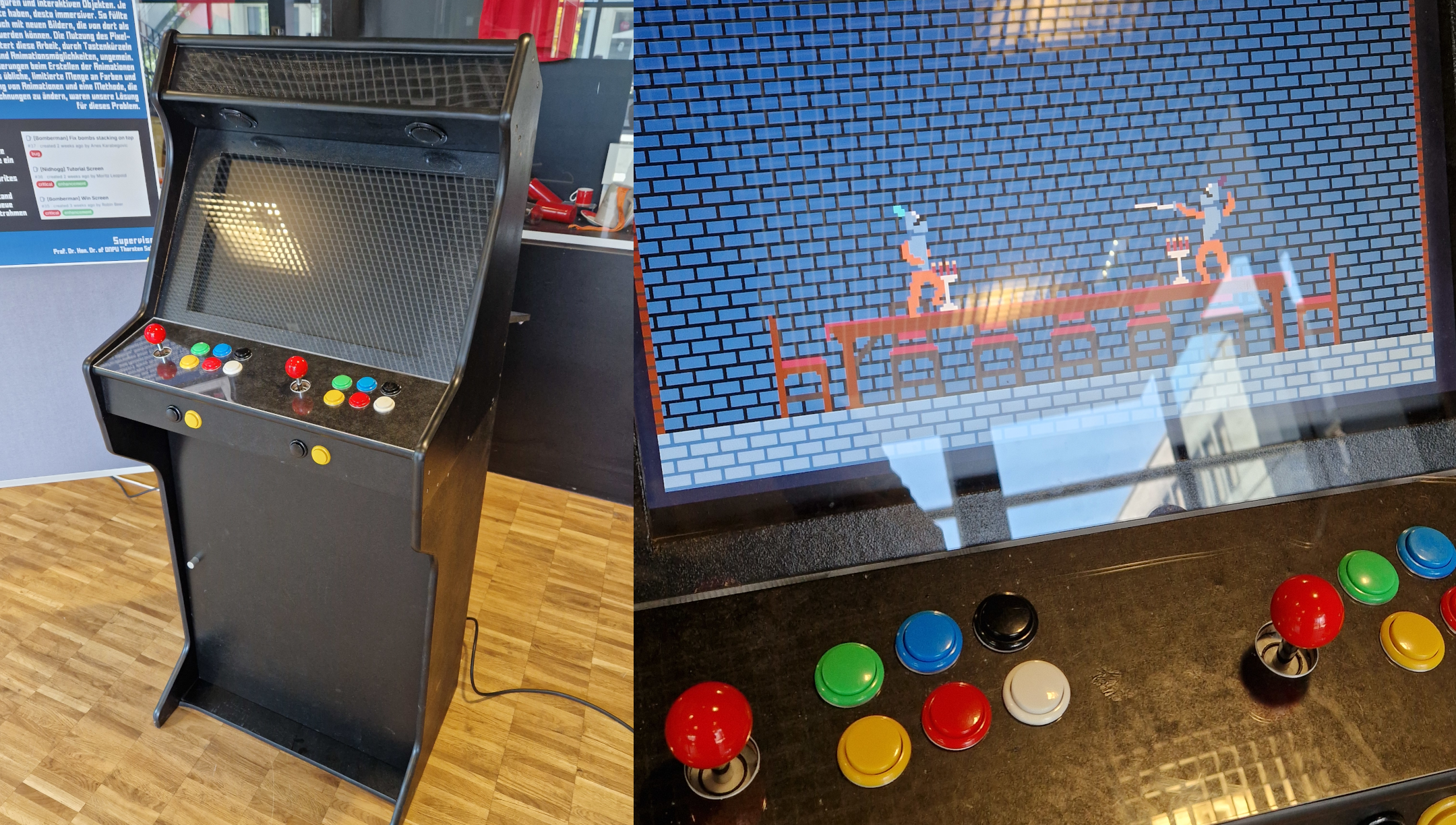
The game ran on a custom-built retro cabinet with joysticks and arcade buttons.